Cuidados después del procedimiento After-procedure care
Recomendaciones después de nefrostomía percutánea After percutaneous nephrostomy

Esta hoja es para el paciente y para el médico que da seguimiento fuera de esta práctica. This handout is for the patient and for the physician providing follow-up outside this practice.
Materiales Supplies
-
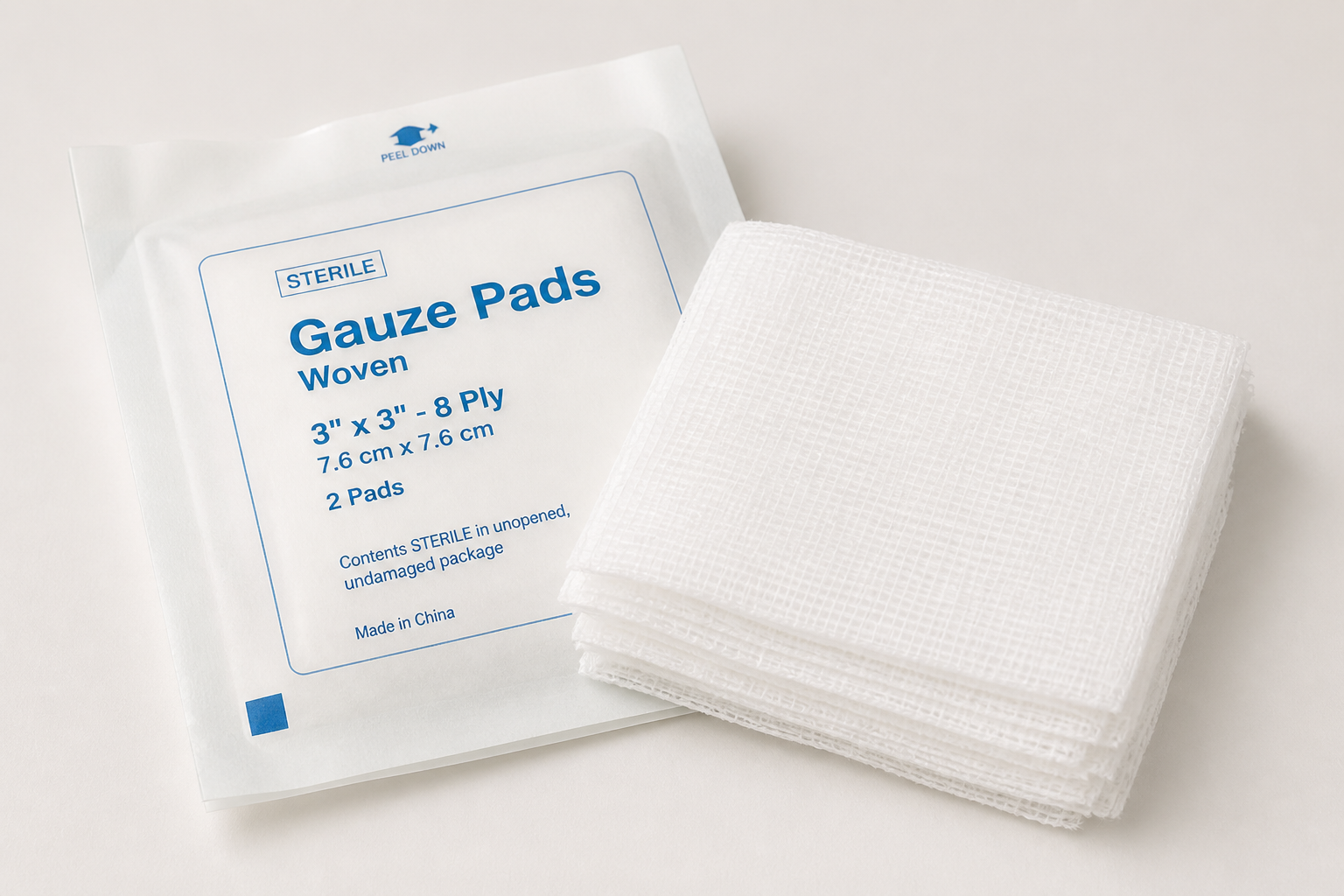
Gasa 3×3 pulgadas 3×3" gauze -
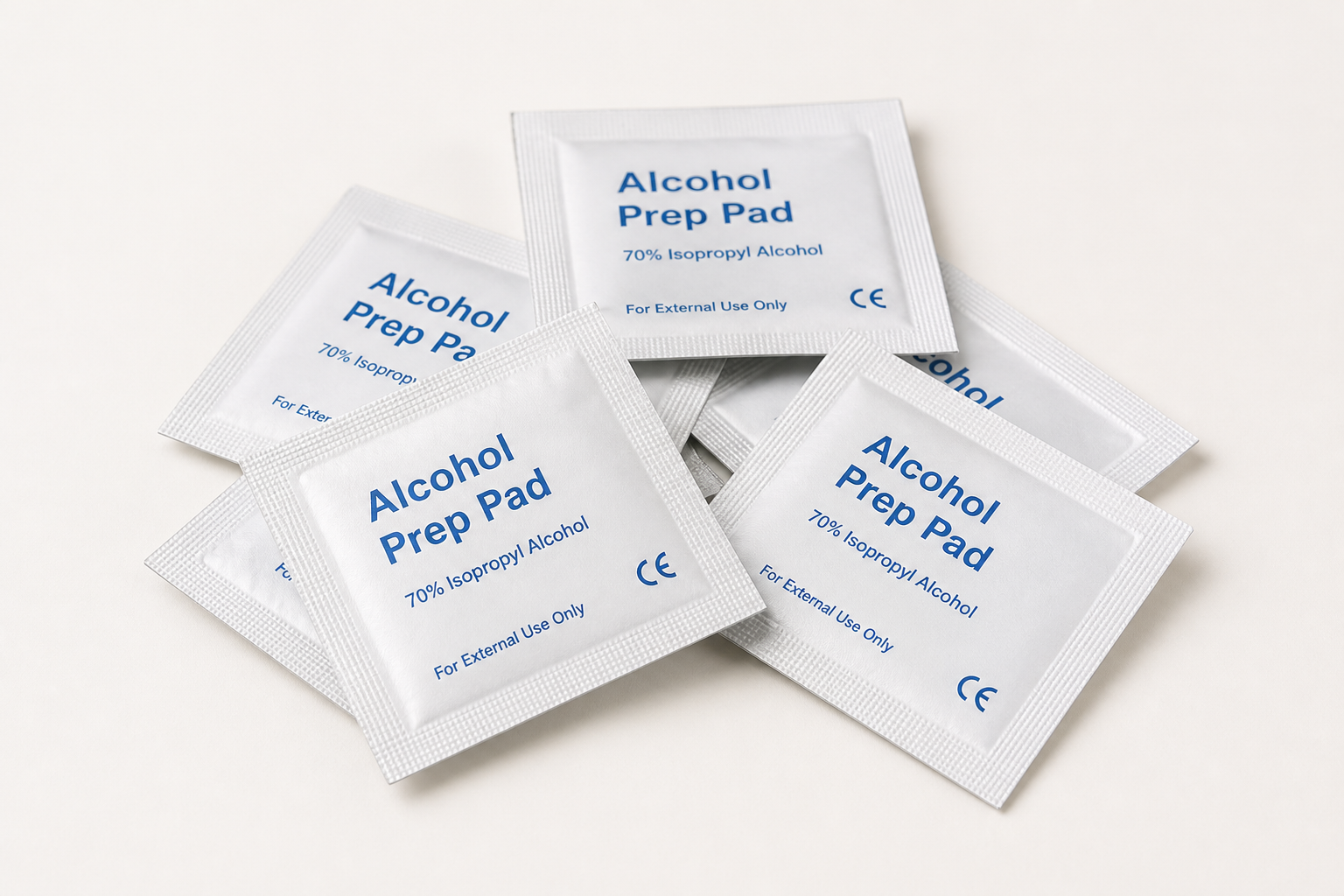
Torundas con alcohol Alcohol swabs -
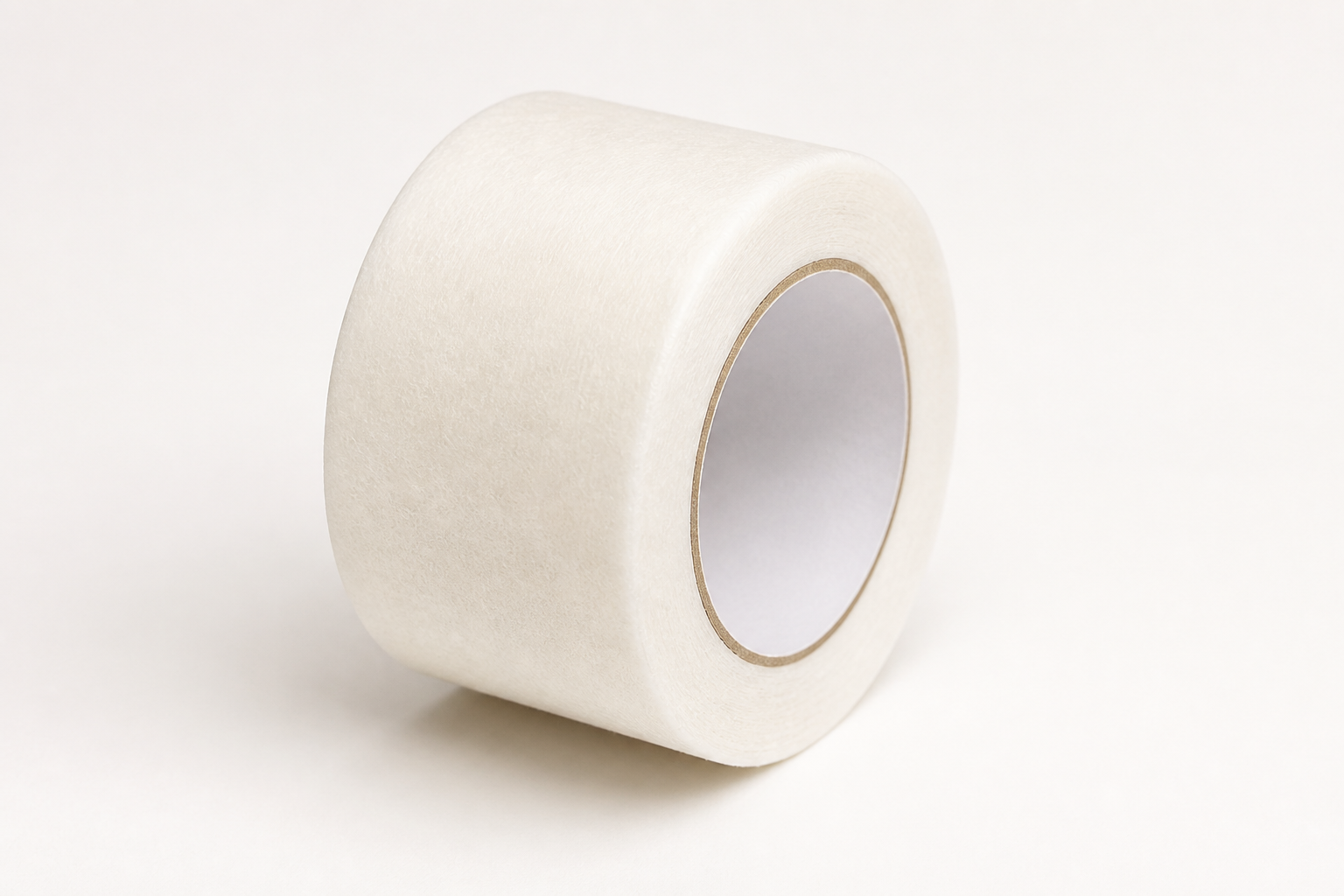
Cinta de 1–2 pulgadas 1–2" tape -
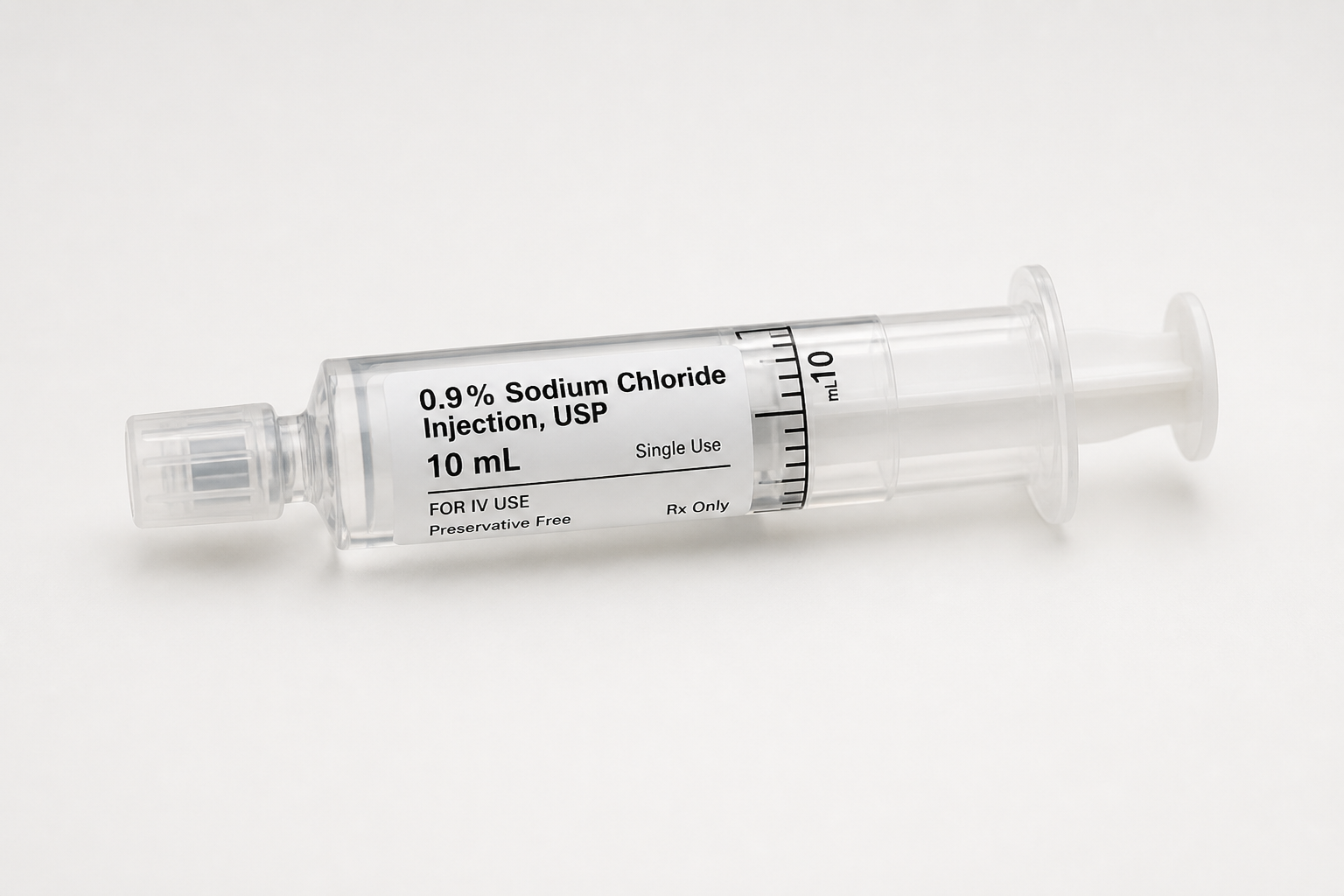
Irrigación de suero salino estéril Sterile saline flush
Lo más importante Most important
Cómo irrigar el tubo, una vez al día How to flush the tube, once a day
Una vez al día. 5 a 10 mL de solución salina estéril al 0,9 %. Con suavidad. Once a day. 5–10 mL of sterile 0.9% saline. Gently.
- Lávese las manos. Abra un frasco o ampolla nueva de solución salina estéril al 0,9 % y extraiga 5 a 10 mL con una jeringuilla limpia, o use la jeringuilla de irrigación estéril que le entregaron. No use agua del grifo. Wash your hands. Open a new sterile 0.9% saline vial or ampule and draw 5–10 mL into a clean syringe, or use the sterile saline flush syringe you were given. No tap water.
- En el hub proximal blanco del tubo de nefrostomía (el conector de plástico con aletitas en el catéter mismo, junto al tubo azul claro — no la bolsa de orina), gire para desenroscar. Limpie el extremo del tubo con una torunda con alcohol. At the white proximal hub of the nephrostomy tube (the winged plastic hub on the catheter itself, next to the light-blue tube — not the urine bag), twist to unscrew. Clean the tube end with an alcohol swab.
- Conecte la jeringuilla e inyecte la solución despacio. Debe entrar con facilidad. Si hay resistencia, párese. No fuerce. No jale hacia atrás con fuerza (no aspire con agresividad). Attach the syringe and inject the saline slowly. It should go in easily. If it meets resistance, stop. Do not force. Do not pull back hard (do not aspirate aggressively).
- Vuelva a enroscar el hub proximal del tubo solo con los dedos. No lo apriete fuerte. No lo fuerce. Apretarlo de más es un problema frecuente. Confirme que la orina gotea hacia la bolsa. Mantenga la bolsa por debajo del riñón y el tubo sin dobleces. Screw the proximal hub of the tube back finger-tight only. Do not twist it back tightly. Do not crank it. Overtightening is a common problem. Confirm urine is dripping into the bag. Keep the bag below the kidney, tubing unkinked.
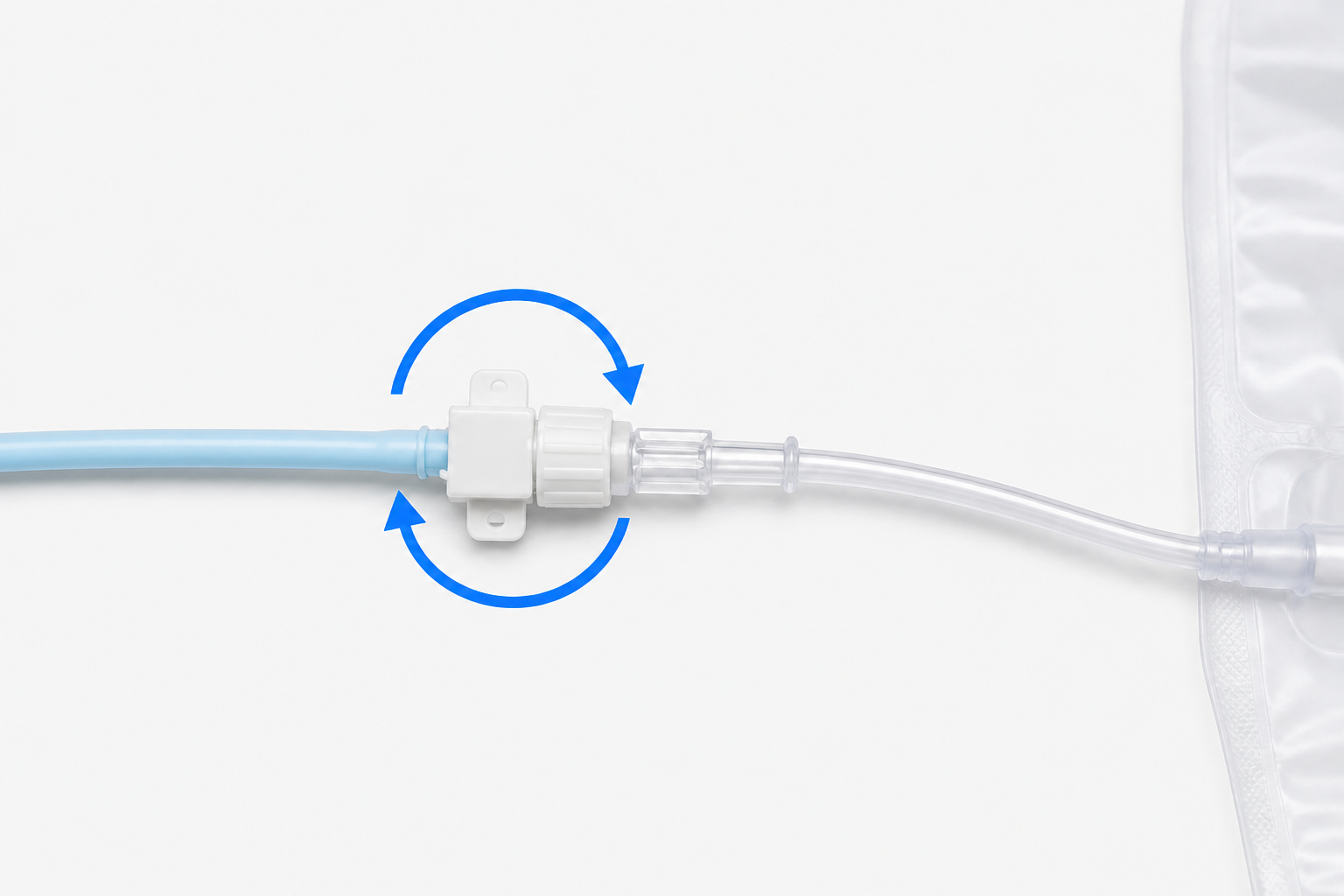
Si no entra, si duele mucho o si después no drena nada: párese. Llame al consultorio (viernes 9:00 a. m. a 2:00 p. m., ext. 2300) o vaya a la sala de emergencias si es fuera de horario o hay señales de alarma. If it will not flush, if it hurts a lot, or if nothing drains afterward: stop. Call the office (Friday 9:00 a.m. to 2:00 p.m., ext. 2300) or go to the ER if it is after hours or if there are red-flag symptoms.
Si en su equipo hay una llave de tres vías, también puede irrigar hacia la bolsa. No es el montaje habitual en el hogar de esta práctica. If a three-way stopcock is present, you may also flush toward the bag. That is not this practice’s usual home setup.
Irrigue solo si le entregaron el equipo (jeringuilla y solución salina estéril). Si no se lo entregaron, no improvise con agua del grifo: llame. Flush only if you were given the supplies (syringe and sterile saline). If you were not, do not improvise with tap water: call.
Paciente Patient
- Qué es el tubo. Un tubo de nefrostomía drena la orina desde el riñón hacia una bolsa, cuando el paso habitual no es seguro o está obstruido. What the tube is. A nephrostomy tube drains urine from the kidney into a bag when the usual path is blocked or not safe.
- Bolsa y tubo. La bolsa siempre por debajo del riñón. El tubo sin dobleces ni acodaduras. No jale, no corte y no pinche el tubo. Bag and tubing. Keep the bag below the kidney. Keep tubing unkinked. Do not pull, cut, or clamp the tube.
-
Apósito. Cómo cambiar el vendaje (“Sandwich” de gasa): Dressing. How to change the bandage (gauze “sandwich”):
- Lávese las manos. Quite el apósito viejo con cuidado; no jale el tubo. Limpie alrededor del tubo con torundas con alcohol; deje secar. Wash your hands. Remove the old dressing carefully; do not pull the tube. Clean around the tube with alcohol swabs; let dry.
-
Tome una gasa de 3×3 pulgadas. Corte una ranura (hendidura) desde el medio de un borde hasta el centro para que quede alrededor del tubo, contra la piel. Take one 3×3" gauze. Cut a slit (slot) from the middle of one edge straight to the center so it can sit around the tube against the skin.
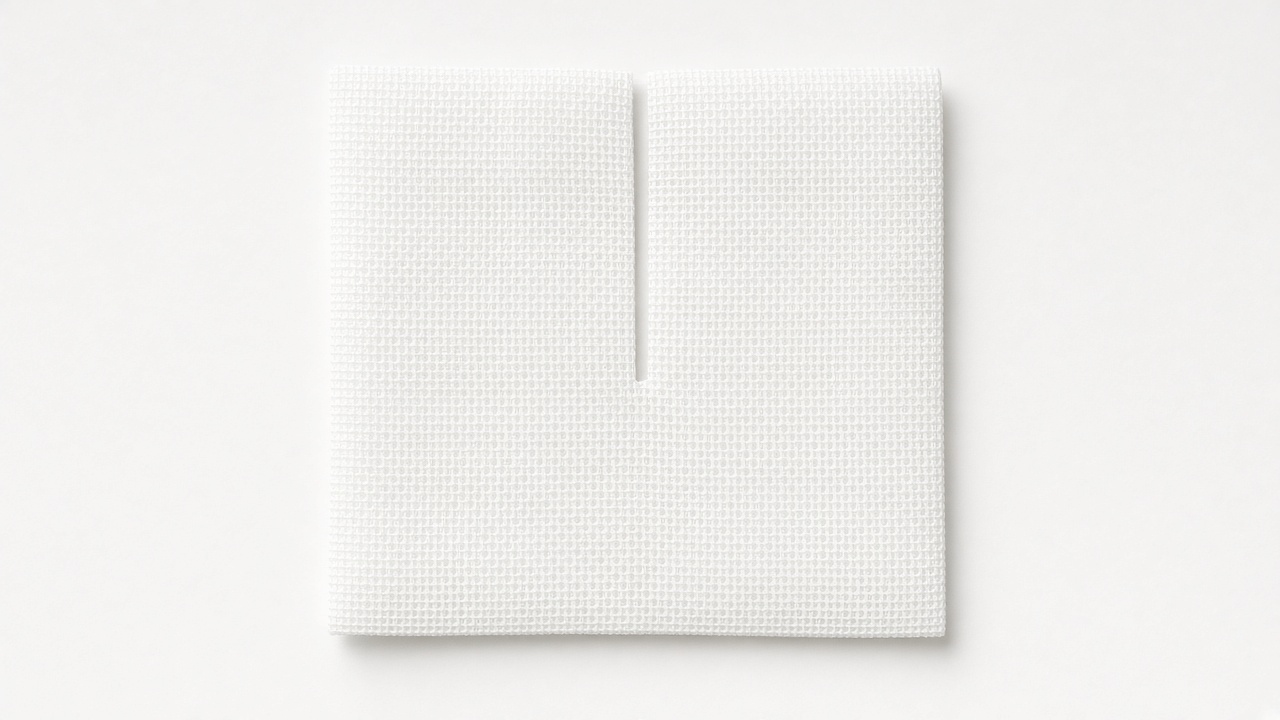
Gasa con ranura Gauze with a slit -
Coloque una segunda gasa de 3×3 pulgadas completa encima de la primera (“Sandwich”) para cubrir el sitio del tubo. Place a second whole 3×3" gauze on top of the first (“sandwich”) so the tube site is covered.

“Sandwich” de gasa Gauze “sandwich” - Fije con cinta de 1 a 2 pulgadas para que el “Sandwich” se quede en su sitio. Manténgalo seco. Dúchese solo como le indicaron al alta. No baños de tina, piscinas ni jacuzzis hasta que se lo autoricen. Si el apósito siempre está empapado de orina, eso es fuga: llame al consultorio (no solo ponga más gasa). Tape with 1–2" tape so the “sandwich” stays in place. Keep it dry. Shower only as instructed at discharge. No baths, pools, or hot tubs until you are cleared. If the dressing is always soaked with urine, that is leaking — call the office (do not just add more gauze).
- Drenaje. Anote color y cantidad si se lo pidieron. La bolsa no debe arrastrar por el piso. Output. Note color and amount if you were asked to. Do not let the bag drag on the floor.
- No clampee el tubo ni detenga el drenaje, a menos que radiología intervencional se lo haya indicado por escrito. Do not clamp the tube or stop drainage unless interventional radiology wrote that instruction.
Cuándo ir a sala de emergencias When to go to the emergency department
- El tubo se salió. Cubra el sitio con gasa seca. No intente reinsertarlo. Vaya a emergencias y comuníquese con radiología intervencional. The tube came out. Cover the site with dry gauze. Do not try to put it back in. Go to the ER and contact interventional radiology.
- Sangrado abundante Heavy bleeding
- Fiebre o escalofríos Fever or chills
- Dolor intenso de aparición súbita Sudden severe pain
- Poco o ningún drenaje y no puede orinar Little or no drainage and you cannot void
- Apósito empapado de sangre Dressing soaked with blood
- Dificultad para respirar o se siente muy enfermo Difficulty breathing or you feel very ill
Cuándo llamar al consultorio When to call the office
Viernes, 9:00 a. m. a 2:00 p. m., (787) 653-0550 ext. 2300. No es una emergencia: Friday, 9:00 a.m. to 2:00 p.m., (787) 653-0550 ext. 2300. Not an emergency:
- Fuga de orina alrededor del tubo Leak around the tube
- Disminución del drenaje (si puede orinar y no hay señales de alarma) Drop in output (if you can void and there are no red-flag symptoms)
- Preguntas sobre el apósito Dressing questions
- Coordinar revisión o cambio del tubo Scheduling a tube check or change
Para el médico de seguimiento For the covering or outside-institution physician
- El paciente tuvo nefrostomía percutánea guiada por imagen. Confirme la lateralidad y tipo de catéter en la nota del procedimiento y en los papeles de alta. The patient had image-guided percutaneous nephrostomy. Confirm laterality and catheter type from the procedure note and discharge papers.
- Irrigación de esta práctica: una vez al día, 5 a 10 mL de solución salina estéril al 0,9 %. El montaje habitual en el hogar es desconectar en el hub proximal blanco del tubo (el conector con aletitas junto al tubo azul claro), irrigar y reconectar solo con los dedos (no apretar fuerte; el apriete excesivo es un problema frecuente). Con suavidad. No forzar si hay resistencia. Detener si hay dolor intenso. Solo solución salina estéril, no agua del grifo. No aspirar con agresividad. No usa llave de tres vías como montaje por defecto; si hay una, también se puede irrigar hacia la bolsa. This practice’s flush: once a day, 5–10 mL of sterile 0.9% saline. The usual home setup is to disconnect at the white proximal hub of the tube (the winged connector next to the light-blue tube), flush, and reconnect finger-tight only (do not crank; overtightening is a common problem). Gentle. Do not force if there is resistance. Stop if severe pain. Sterile saline only, not tap water. Do not aspirate aggressively. A three-way stopcock is not the default home setup; if one is present, the patient may also flush toward the bag.
- No clampee el tubo a menos que esté documentado en la nota. Do not clamp unless that is documented in the note.
- Si el tubo se sale: no lo reemplace a ciegas. Cubra el sitio con gasa seca. Sala de emergencias y contacto con radiología intervencional. Dislodgement: do not blindly replace the tube. Cover the site with dry gauze. Emergency department plus contact with interventional radiology.
- Infección, obstrucción o anuria: evaluación urgente y contacto con radiología intervencional. Infection, obstruction, or anuria: urgent evaluation and contact interventional radiology.
- Cuidado rutinario y recambio: coordine con esta práctica. Siga la nota del procedimiento. Los recambios suelen programarse en semanas con radiología intervencional; confírmelo. No espere un intervalo «estándar» no especificado si el paciente está sintomático. Routine care and exchange: coordinate with this IR practice. Follow the procedure note. Exchanges are typically scheduled in weeks with IR; confirm. Do not wait for an unspecified “standard” interval if the patient is symptomatic.
- Esta página no es un expediente médico completo. Use la nota del procedimiento. This page is not a complete medical record. Use the procedure note.
Información general. No sustituye la nota del procedimiento ni la atención de emergencia. Informational only. It does not replace the procedure note or emergency care.